The last five years have proven that disruption is no longer episodic; it is the new normal in business transformation. As we move into 2026, that reality shows no signs of slowing.
The rapid and increasingly sophisticated evolution of generative AI, digital reinvention, economic uncertainty, and shifting customer expectations mean that organisations have been forced to navigate constant twists and turns.
This pace of change has made the business landscape feel increasingly complex and, at times, messy, with businesses often struggling to distinguish between credible, long-term transformation trends and the loudest voices in the room.
But we hope to give some clarity. In 2026, we expect to see:
Digital change dominating the transformation space, with a focus on AI and automation
Lessons learnt from the M&S cyber attack leading to stricter online security
Hiring becoming more important than ever, with equity and skills a top need
Read on for a comprehensive overview of the business transformation trends that will matter most in 2026.
Building the ethos of change
When the economic environment around you remains unsteady, it’s easy for strategy to go amiss. Pushing through initiatives at speed simply because of the pressure to ‘keep up’ is dangerous.
This anxiety about falling behind is understandable, but managing change effectively is an art in itself.
As the pressure grows to deliver outcomes faster, more efficiently, and with fewer resources, businesses must be deliberate about how change is implemented in a systematic and sustainable way. As McKinsey describes:
“Given that CEOs and executive teams are measured on the performance of the entire business, they cannot afford to be successful in just the transformation or the day-to-day; they must succeed in both, together. Yet, it’s easy for these efforts to conflict.”
In 2026, balancing these two elements of business will be more critical than ever.
It’s no longer just about what you change, but how you change. As transformation becomes more iterative and dynamic, this agility can quickly become a liability if it isn’t underpinned by the right systems and guidance.
Poorly designed change processes can create confusion and erode productivity, the very opposite of what transformation is intended to achieve.
What Business Transformation Looks Like in 2026
As we move into 2026, these are the business transformation trends you and your business need to look out for, and for which you must ensure you have strategies in place.
The rise of zero-trust security
We all saw the fallout of the M&S cyber attack in April 2025. The impact was huge, with an estimated £30 million loss of profits reported by the BBC. More concerning still was that it took a shocking 15 weeks for the large retailer to get its click and collect service back online.
But M&S was not alone. Other organisations such as the UK Foreign Office, DXS International (a tech supplier for the NHS), and Co-Op also faced security attacks this year.
It’s an expensive lesson, but a lesson nonetheless. With sophisticated hacking on the rise, businesses need to take security seriously in 2026, and it looks like they are, as PwC reports:
"85% of UK organisations plan to increase their cyber budgets in 2026 to keep pace with evolving threats."
As a result, approaches such as zero-trust architecture, which assume no user or system should be trusted by default, regardless of location, are set to become standard practice.
AI tech stacks get serious
It’s now been over three years since generative AI entered the workplace, and we’re still learning how artificial intelligence will transform business. Initially, its use felt largely focused on content creation, drafting copy, generating visuals, or automating simple tasks.
But the AI landscape has evolved rapidly. Today, tools can do much more:
Summarise meeting notes in seconds
Build client decks without tedious design alignment
Automate workflows and provide insights from complex data
In 2026, this trend is set to accelerate. Companies will increasingly move beyond pilot and experimental phases, scaling AI use across teams and functions (seen in McKinsey’s AI adoption graph below).
That said, adoption won’t be seamless. Employees may still encounter fragmented tools, while executives will need patience to identify which solutions truly drive productivity.
Hyper-automation on the cards
If you once thought an Excel sheet that auto‑populates survey data was clever, brace yourself: automation in 2026 is moving far beyond simple tasks.
Workflows are becoming multi‑step, intelligent, and integrated across entire business ecosystems, not just basic “if this, then that” processes.
Platforms like Zapier illustrate this shift.
Today, billions of automated tasks run every year, with over 1.5 billion tasks per month, and usage is growing rapidly.
This rise in complexity is also reflected in how businesses are adapting roles and expectations around automation.
Companies are increasingly investing in specialist automation and AI roles to build, manage, and optimise workflows rather than relying on occasional pilots.
As AI and automation become more central to operations, many UK business leaders expect to hire more staff, whether that’s a consultative role helping to implement processes or full-time management.
An equitable organisation is an attractive one
Despite what some LinkedIn ‘thought-leaders’ might have you believe, DEI efforts are still proving impactful on businesses in 2026.
The data helps paint a picture.
“More than three out of four employees (76%) say they are more likely to stay with their employer long term if their employer continues to support diversity, equity, and inclusion.”
Catalyst, a US-based data company, claims that this statistic becomes even higher in subgroups like women, Gen Z and Millennial workers.
That’s a huge statistic if you consider the talent pool it represents. Businesses that want to avoid the dreaded ‘quiet-quitting’, disengagement, or an inability to even attract talent, being vocal and consistent about equity can provide a good impression.
Think about policies, behaviours, and systems organisations use to ensure people of all backgrounds have fair access to opportunities and feel included at work.
This is especially needed when the online space is increasingly venomous and divided.
.png)
Shoppertainment dominates social media
This year, e‑commerce is increasingly turning to social media as a springboard for sales, but we’re talking about more than simply product promotion.
Brands are creating communities centred on entertainment, from live streams and short-form videos to interactive challenges, that engage audiences and keep them returning.
This “shoppertainment” approach recognises that attention itself is a form of currency, even if it doesn’t convert into immediate sales.
Platforms such as TikTok, Instagram, and YouTube are now full ecosystems where discovery, interaction, and transaction happen seamlessly (or should be!). Brands are getting creative: gamified experiences and influencer-driven campaigns are now table stakes.
The key takeaway? In 2026, e-commerce success isn’t measured only in products sold. It’s about creating experiences so fun, shareable, and addictive that your customers keep coming back for the encore.
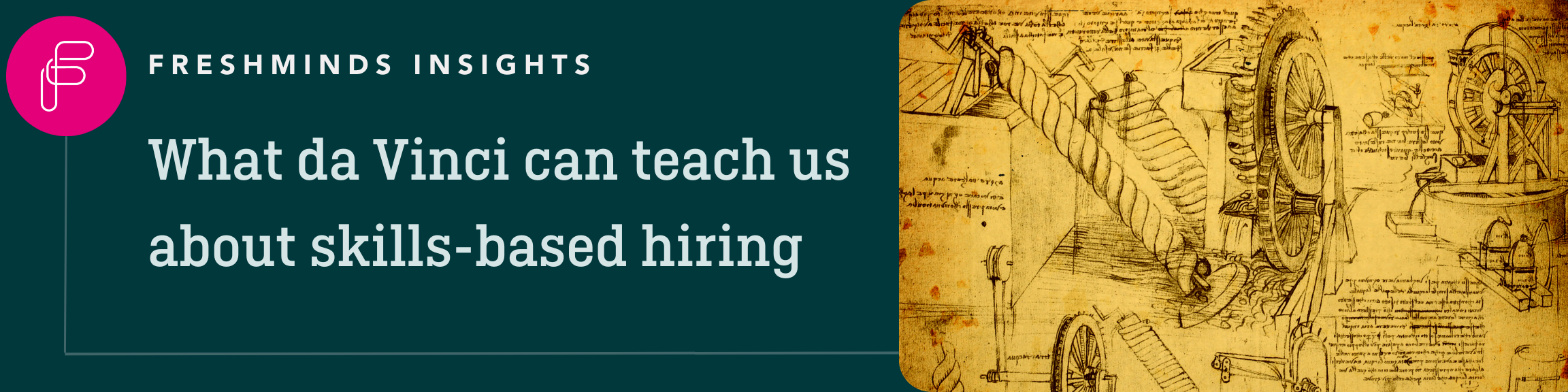
Skills-based hiring
Hiring isn’t just about the degrees on a CV; it’s about what people can actually do. Skills-based hiring is gaining momentum as organisations shift focus from credentials to capabilities. Rhodri Jones, communications and content consultant, puts it plainly:
“The shift towards skills-based hiring is not a passing trend. It reflects a deeper structural change in how work is created, delivered and valued”
The concept is simple: teams that learn, adapt, and problem-solve outperform those who just tick boxes. It also expands the talent pool, fostering diversity of thought by looking beyond formal degrees and past job titles.
The stakes are high. Rapid digital transformation and AI adoption mean the skills that mattered yesterday won’t solve tomorrow’s problems.
Structured assessments, scenario-based interviews, and competency frameworks help organisations identify talent capable of building tomorrow’s organisation. The payoff? Diverse, resilient teams ready to tackle the unknown.

Digital transformation at the heart of change
In 2026, digital remains firmly at the core of business transformation. Every function, from operations to marketing, is feeling the weight of digital change, and the pace shows no signs of slowing.
But let’s not forget that people are ultimately the drivers of change. As James Callander, MD of Freshminds, observes:
“We continue to try to seek out the warmest, most competent and adaptable people, whether they lie on the client or candidate side of our business.”
Yet distinguishing meaningful transformation from short-lived experimentation has never been harder. Leaders are no longer asking whether they need to transform; the question is now where to focus and how to execute with confidence and clarity.
This year, the organisations that thrive will be those that combine technological adoption with strategic focus, turning digital disruption into opportunity rather than chaos - not an easy task.
FAQs: Business transformation trends in 2026
What are the biggest business transformation trends in 2026?
The major themes we expect to see in 2026 are zero-trust cybersecurity, more mature AI tech stacks, hyper-automation, skills-based hiring, and a stronger focus on equity and inclusion as a talent driver. Many organisations are also prioritising digital transformation programmes that are sustainable, not just fast.
What does “business transformation” actually mean in practice?
Business transformation refers to a structural shift in how an organisation operates, typically across people, process, technology, and culture, to deliver better outcomes (speed, cost, customer experience, resilience). In 2026, it’s less “one big change programme” and more continuous improvement with clear governance.
How can leaders tell the difference between a real trend and hype?
A useful set of questions to help determine the difference between a real trend and temporary hype is as follows:
Does it solve a clear business problem (cost, risk, growth, customer value)?
Can you measure impact within 90 - 180 days (even if full transformation takes longer)?
Do you have the capability and data to support it?
If the answer is “no” to all three, it’s probably noise.
What is zero-trust security, and why is it rising in 2026?
Zero-trust is a security approach that assumes no user, device, or system should be trusted by default, even if it’s inside the network. In 2026, it’s becoming more standard because high-profile breaches and supply-chain risks are pushing organisations to tighten access, identity controls, and monitoring.
How will artificial intelligence transform business in 2026?
AI has moved beyond “helpful tools” into embedded workflows: decision support, automation across functions, insights from large datasets, and faster delivery of internal work (research, reporting, operations, customer support). The shift in 2026 is about scaling AI safely, with governance, integration, and measurable ROI.